
The Manufacturing Partner Who Starts With Your Brief, Not a Fixed Range
You get a packaging advisor and manufacturing partner, not a catalog to pick from. We define what your project needs, then match it to the right production environment across an established international network. When standard materials or constructions fall short, we develop alternatives. One team stays accountable from sourcing through final delivery, so brand standards, cost, and timeline hold together.
Production Approach
Selecting the right production partner is not a default decision. We evaluate partners based on what the project requires: technical capability for the specific construction or material, quality consistency across production runs, cost structure relative to your budget, and capacity to meet your timeline.
When the right production path does not exist within our current network, we develop it. That includes refining processes with partners, validating new materials, or establishing new supplier relationships where the project warrants it.
What This Delivers
Flexibility Beyond Standard Formats
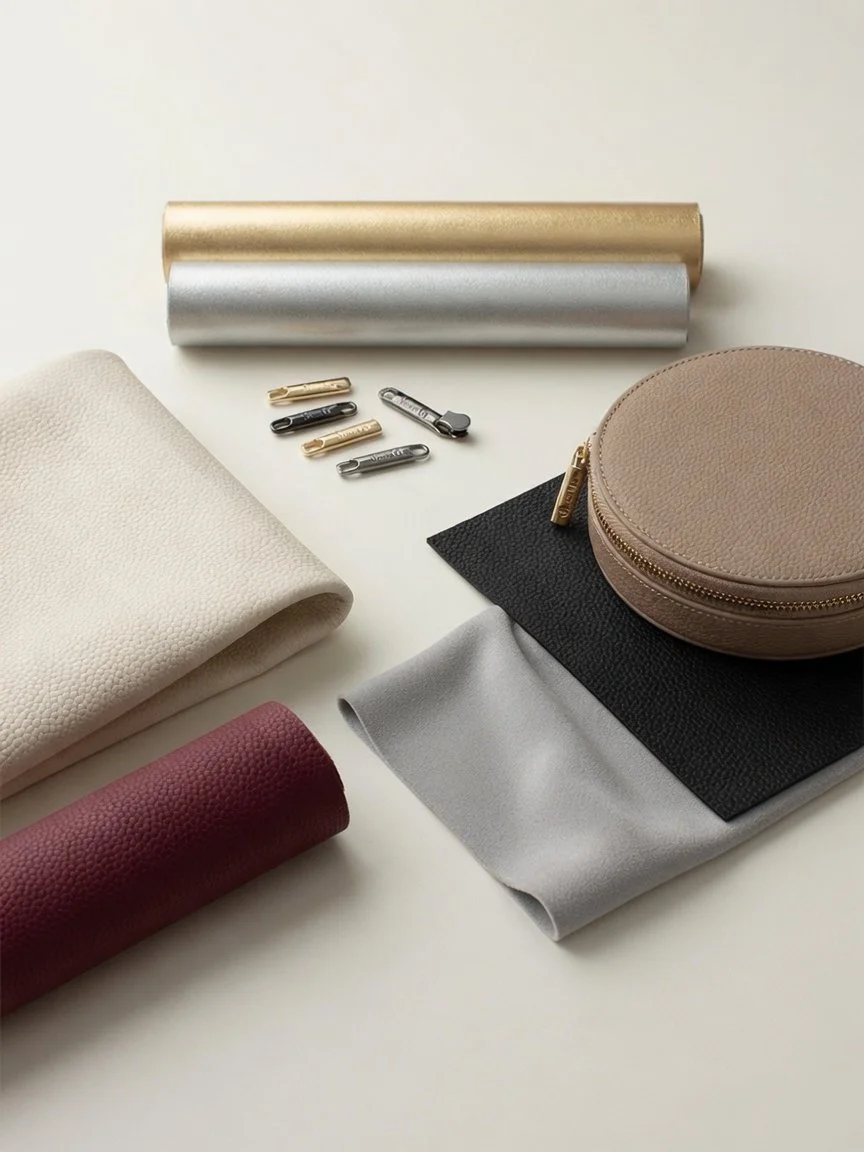
We work with non-standard constructions, specialty materials, and requirements that fall outside what catalog suppliers can accommodate.
A Clear View of Cost, Quality, and Timeline
Before production begins, you have a defined picture of what the project costs, what it will produce, and when it will arrive. Changes are tracked and communicated, not absorbed quietly.
Single-Point Accountability
One team manages sourcing, supplier relationships, quality control, and logistics. If something needs resolving, there is one team responsible for resolving it.
Reduced Risk on Complex Requirements
Non-standard projects carry more variables. We manage those variables through careful partner selection, structured sampling, and defined approval checkpoints — not assumptions.
Materials
We source and manufacture across a broad range of materials, selected for what the project requires rather than what is easiest to supply.
Recycled and FSC-certified Papers — suitable for both premium and sustainability-focused briefs
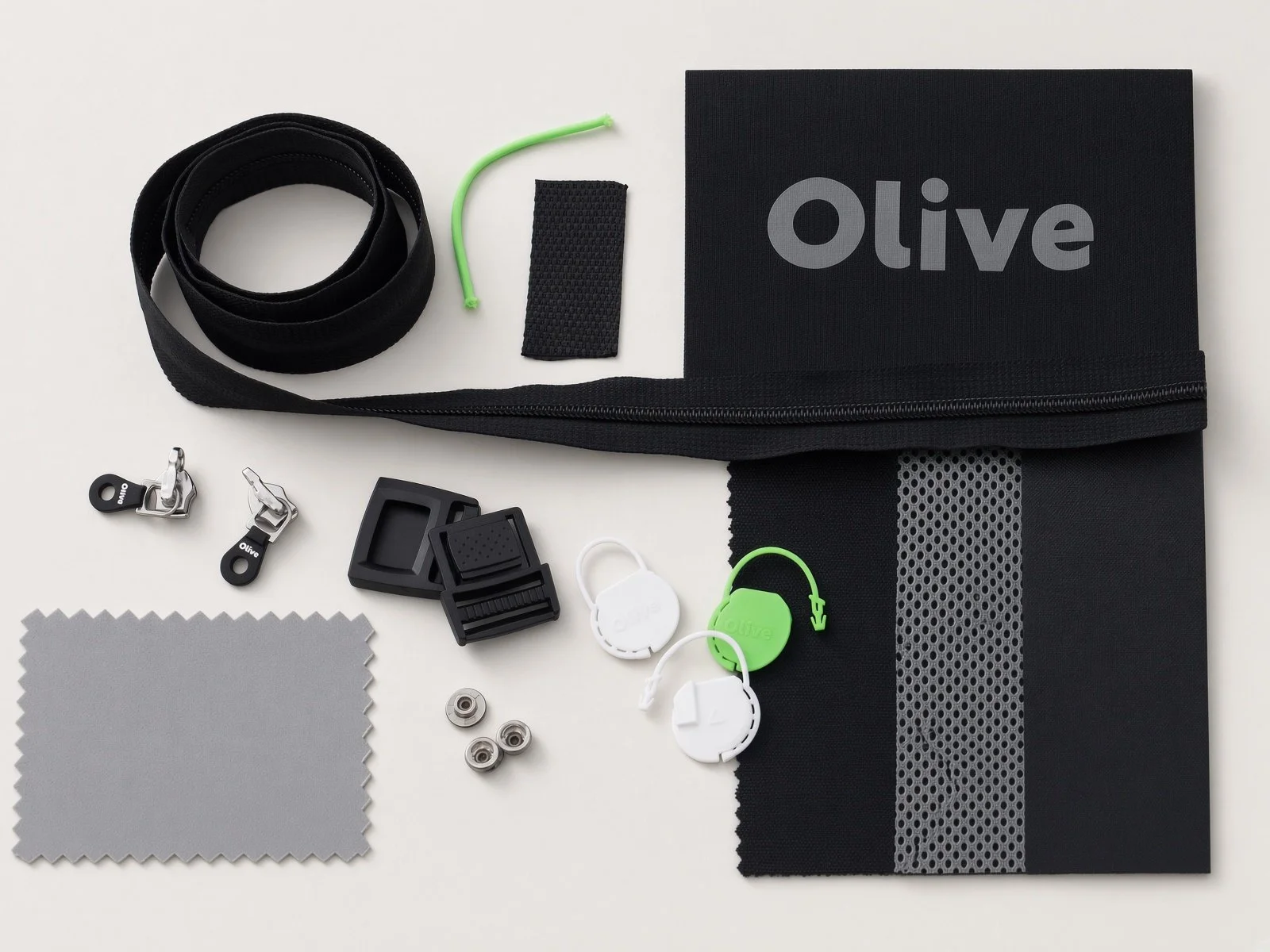
Specialty Textiles — including woven fabrics, technical materials, and custom-developed options
Hardware and Closures — magnetic closures, custom fittings, and specialty fasteners
Technical Materials — engineered substrates and materials developed for specific structural or performance requirements
Custom-developed options — where standard materials do not meet the brief, we work with partners to develop what is needed






Manufacturing Partner, Not Catalog Supplier
A catalog supplier gives you options from a fixed range and works to fit your project into what they already produce. A manufacturing partner begins with your requirements and builds the production approach around them.
Kargo assesses what your project actually needs, identifies the right production path, and manages the process through to delivery. You get direct answers on capability, cost, and timeline before any commitment. One team is accountable from sourcing through final delivery.
That is what it means to manufacture to requirement.
Sustainability & Certifications
Kargo works with certified partners to support sustainable sourcing and manufacturing. Where projects require certified materials or supply chain documentation, we ensure the relevant certifications are in place and that chain-of-custody records are available.
-
Forest Stewardship Council
FSC certification covers paper, board, and wood-based materials sourced from responsibly managed forests. It is the most widely recognized certification for paper-based packaging and is accepted by most major retailers and brand standards programs. Available as FSC 100%, FSC Mix, or FSC Recycled depending on the material source and supply chain. -
EU Packaging and Packaging Waste Regulation
The PPWR (Regulation (EU) 2025/40) is the primary regulatory framework governing packaging placed on the EU market. It applies from 12 August 2026 and sets requirements around recyclability, substance restrictions (including PFAS limits in food-contact packaging), labelling, and conformity assessment. Further obligations, including minimum recycled content targets for plastic packaging and stricter design-for-recycling criteria, phase in from 2030. Guidance and FAQs published by the European Commission (including the March 2026 Guidance document) support practical interpretation of the rules. We factor PPWR requirements into material and structural decisions when projects are destined for or may reach the European market.
-
Global Recycled Standard
GRS applies to products and materials made from recycled content. It covers both pre-consumer and post-consumer recycled inputs and includes requirements for social and environmental practices within the supply chain. GRS is relevant for projects targeting credible recycled material content claims, particularly for textiles and specialty materials.
What This Means in Practice
Certification availability depends on the material, the production partner, and the region of manufacture. Not every certified material is available in every market or at every price point. When sustainability certifications are a project requirement, we confirm what is achievable within your cost and timeline parameters before committing to a specification. Where full certification is not achievable, we provide a clear account of what is and is not possible.


Typical Project Timeline
-
Weeks 1–2
We begin by establishing what the project requires: format, materials, construction, cost targets, and timeline. This stage produces a clear project brief that guides every decision that follows. For complex or non-standard requirements, this stage may extend to accommodate technical assessment.
-
Weeks 3–6
Based on the project brief, we select production partners and initiate sample development. Standard projects typically involve one to two sampling rounds. Complex projects with new constructions or materials may require additional rounds to reach a confirmed specification.
-
Weeks 7–8
Samples are reviewed and approved against the confirmed specification. Pre-production checks are completed, including material sourcing confirmation, tooling sign-off, and production scheduling. No production begins without confirmed approval at this stage.
-
Weeks 9–14 (standard) / Weeks 9–18 (complex)
Manufacturing runs against the approved specification and confirmed timeline. Progress is tracked against defined milestones. Any deviation from the approved spec is flagged and resolved before the production run continues.
-
Weeks 15–16 (standard) / Weeks 19–22 (complex)
Finished goods are inspected against the approved specification before packing and shipment. Inspection criteria are defined at the approval stage and applied consistently. Shipping is coordinated to your required delivery window.
Typical Total Timelines:
Standard projects: 10–16 weeks
Complex or non-standard projects: 18–22 weeks
Timeline estimates assume a confirmed brief and timely approvals at each stage. Projects with extended decision cycles or late-stage specification changes will require timeline adjustments.