

A Reusable Shipper Rebuilt Around How the Business Actually Runs
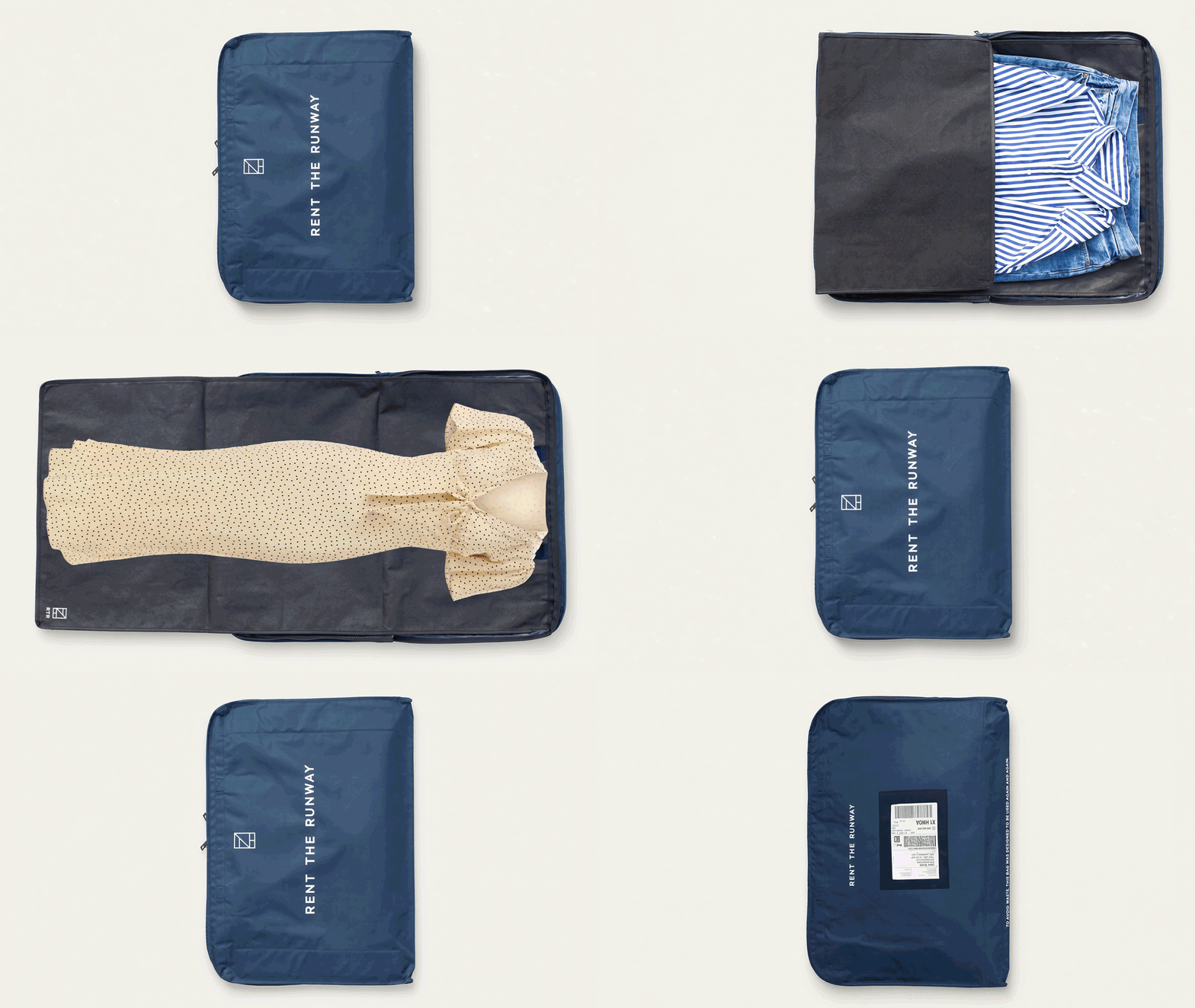
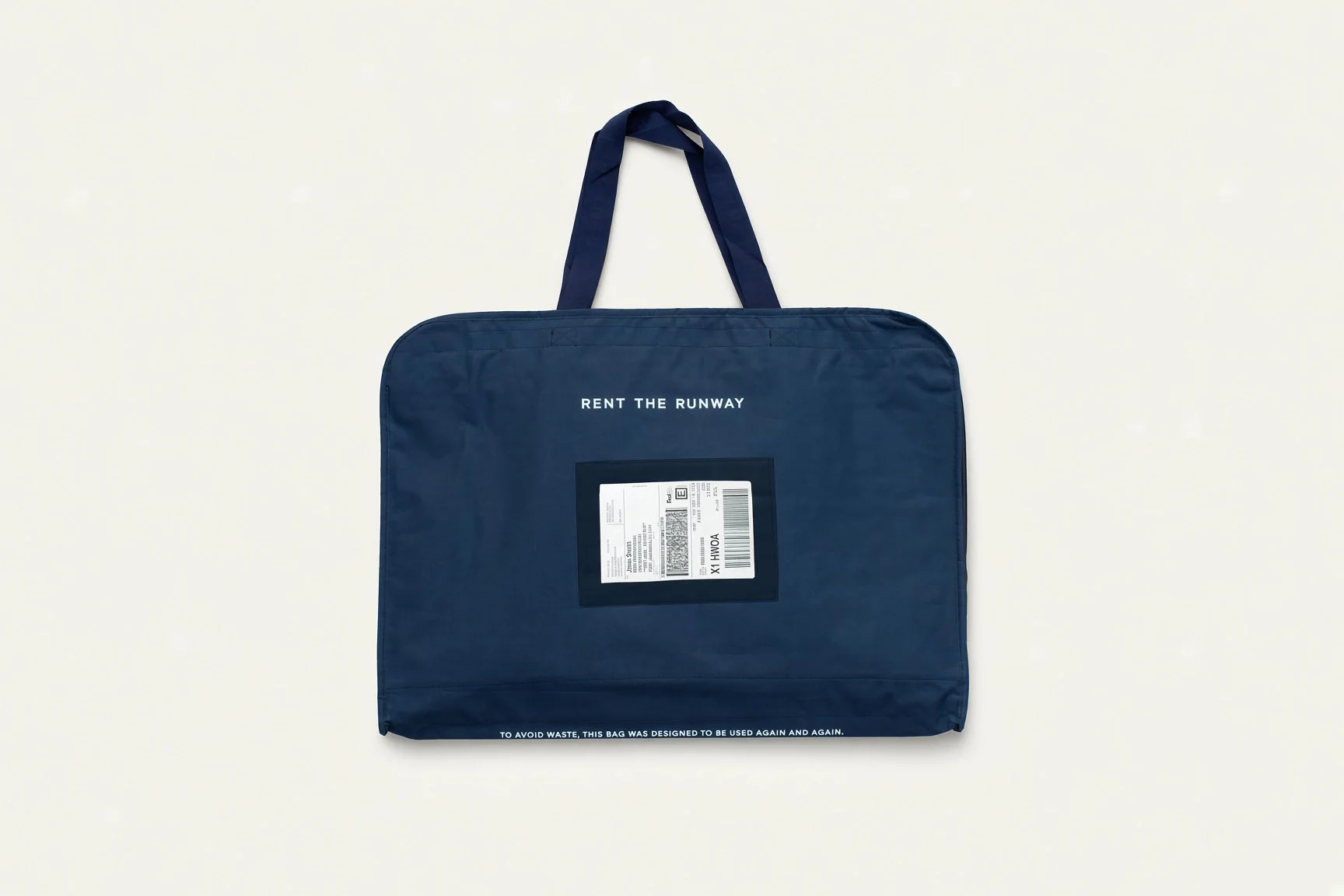
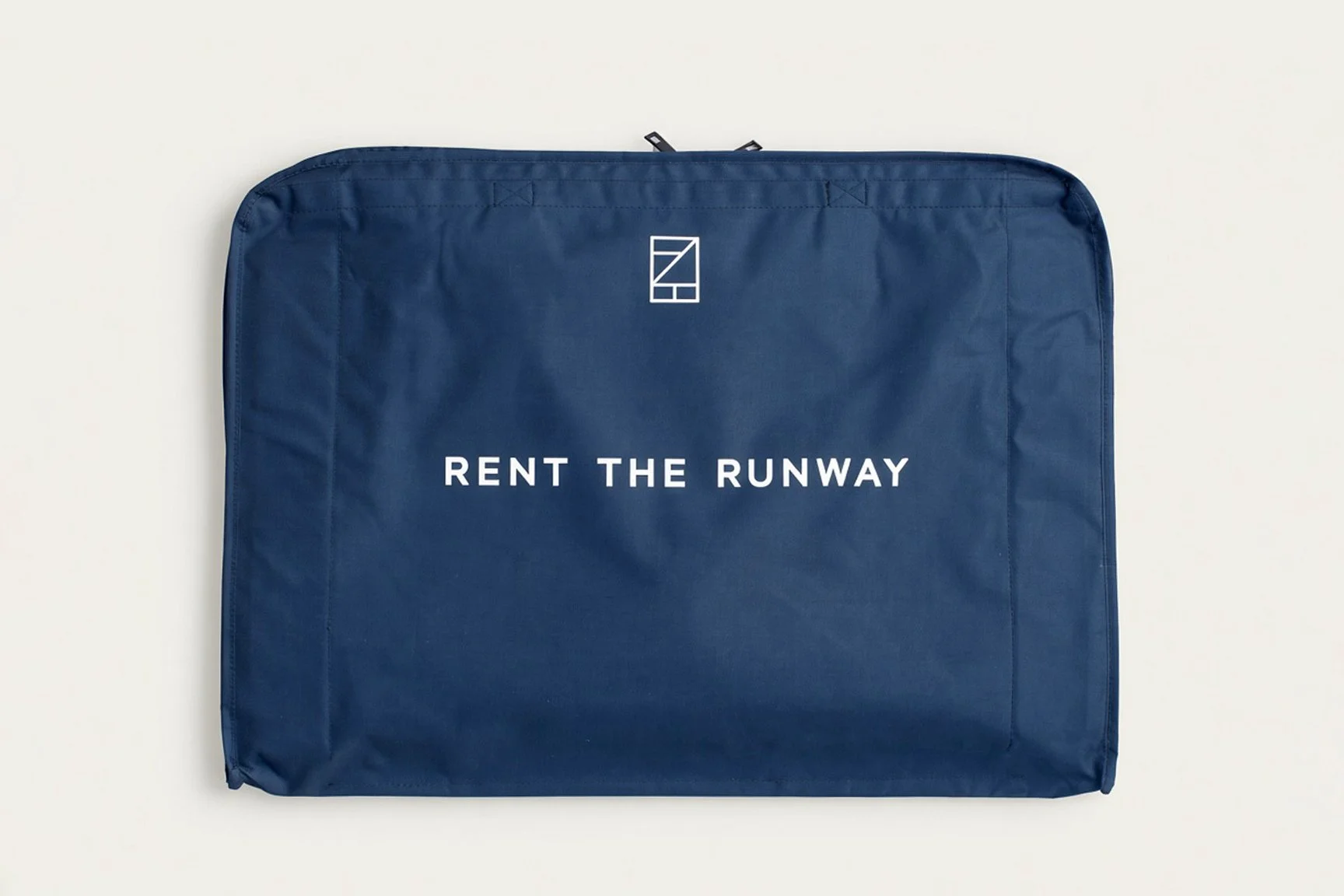
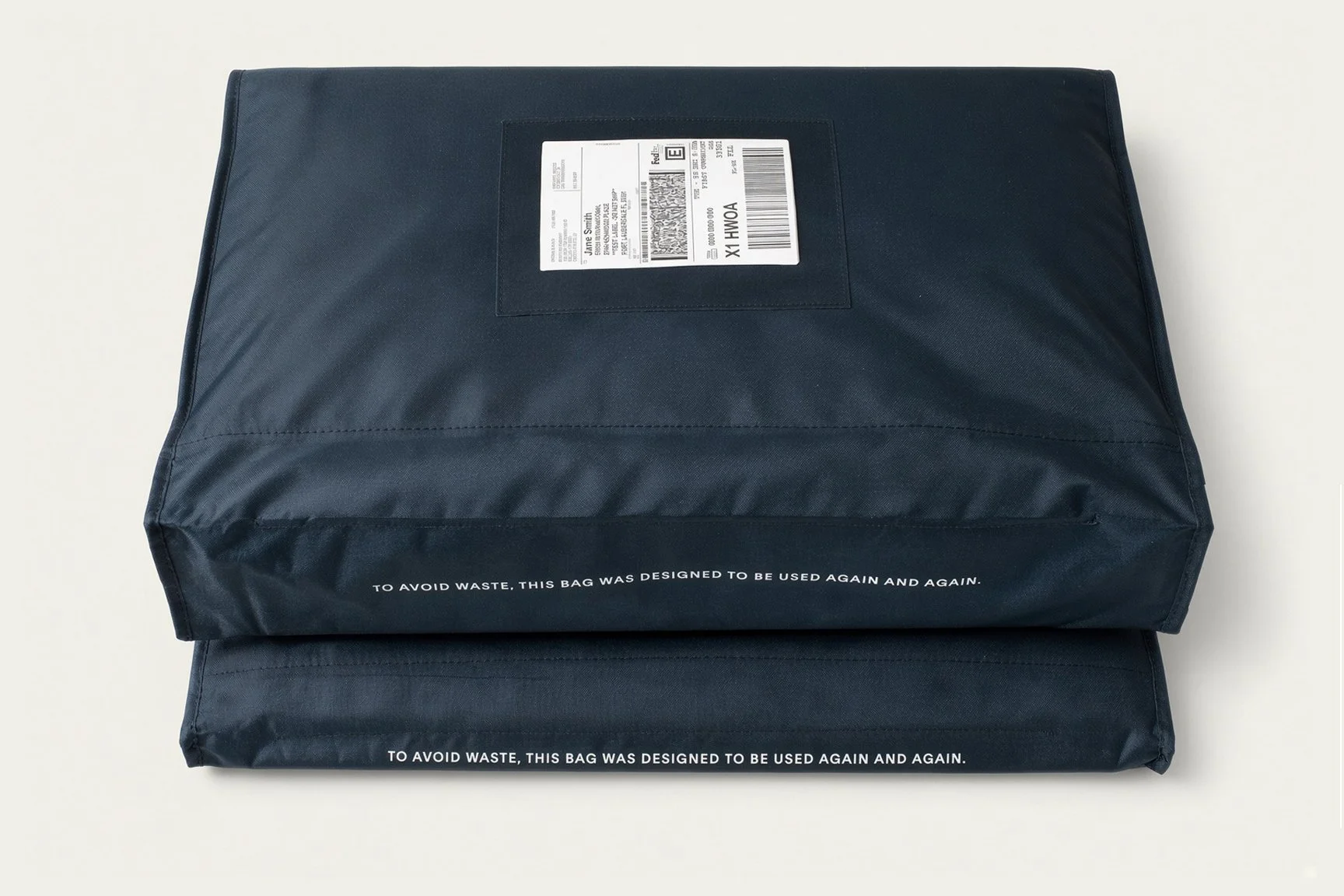
Rent the Runway pioneered designer fashion rental at scale built around a proprietary reusable garment shipping bag. That ubiquitous bag has been part of the service since Renée Graham developed the first one while leading packaging at RTR in 2014. As a wildly successful innovation, the design that was soon recognized with honors such as the 2016 NPF Mail Innovation Award. However, as the business expanded, the shipper stopped keeping pace with the operation and required re-engineering. Kargo was contracted to rebuild a v2.0 system that cost less, loaded faster, and no longer depended on disposable layers. The result, a signature navy portfolio-style shipper aka “The Wallet”, launched in 2025.
The Challenge
Reuse was never the problem. The shipper in use still relied on poly sleeves and hangers traveling inside orders, which undercut the reusable promise and added cost and handling time on the warehouse line. Rent the Runway needed a shipper that worked as part of the operation, not a container around it.
The 2014 bag was made from fabric that had to be washed after every rental, which was expensive. The new shipper had to cost less than the 2014 bag, last about 25 shipments, and wipe clean instead of being washed. It needed a flat face for the label, had to hold up in sorter equipment, and had to keep garments secure and wrinkle-free without poly or a hanger. It also had to be faster to pack and better for customers to receive.

The Solution
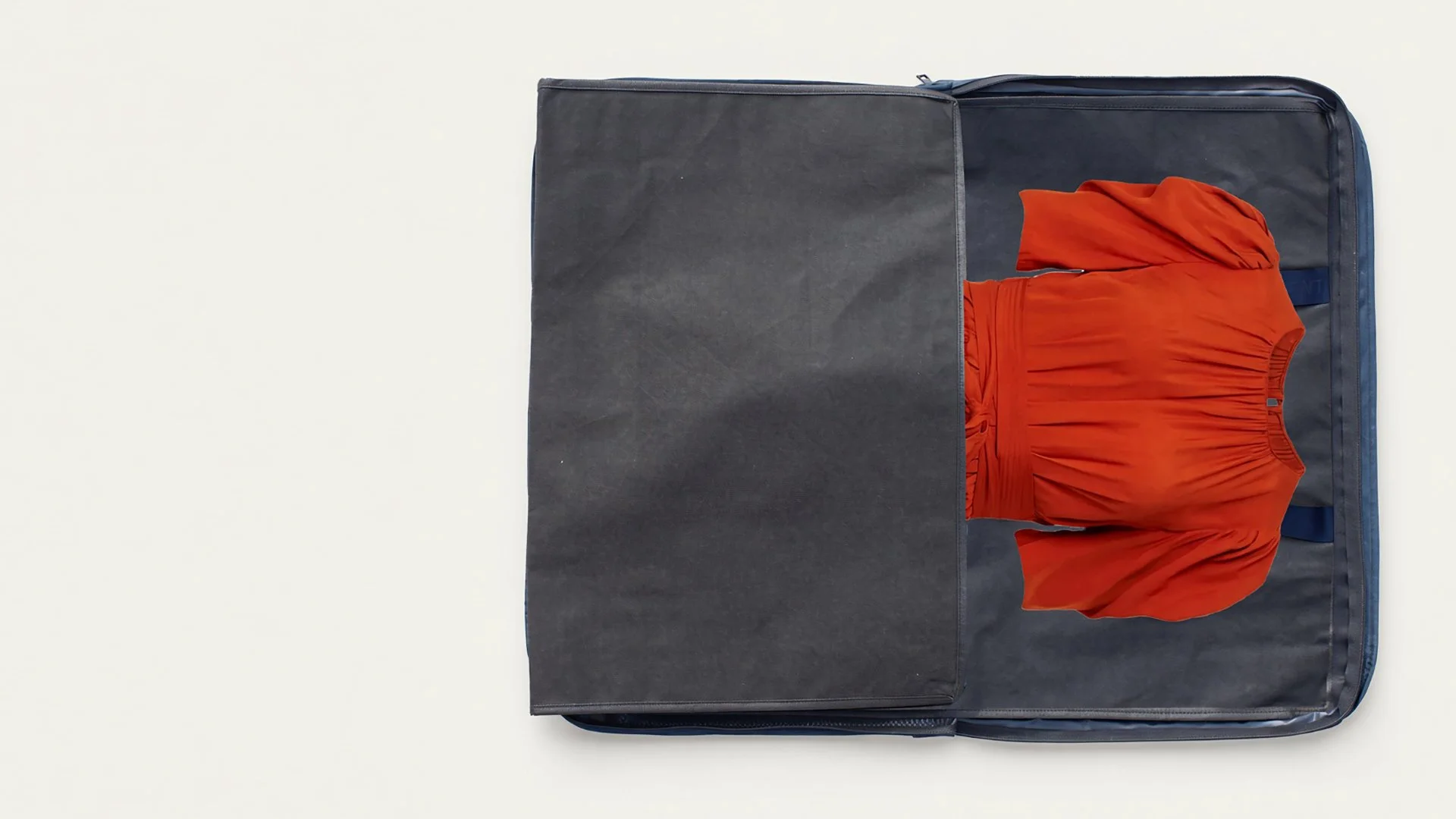
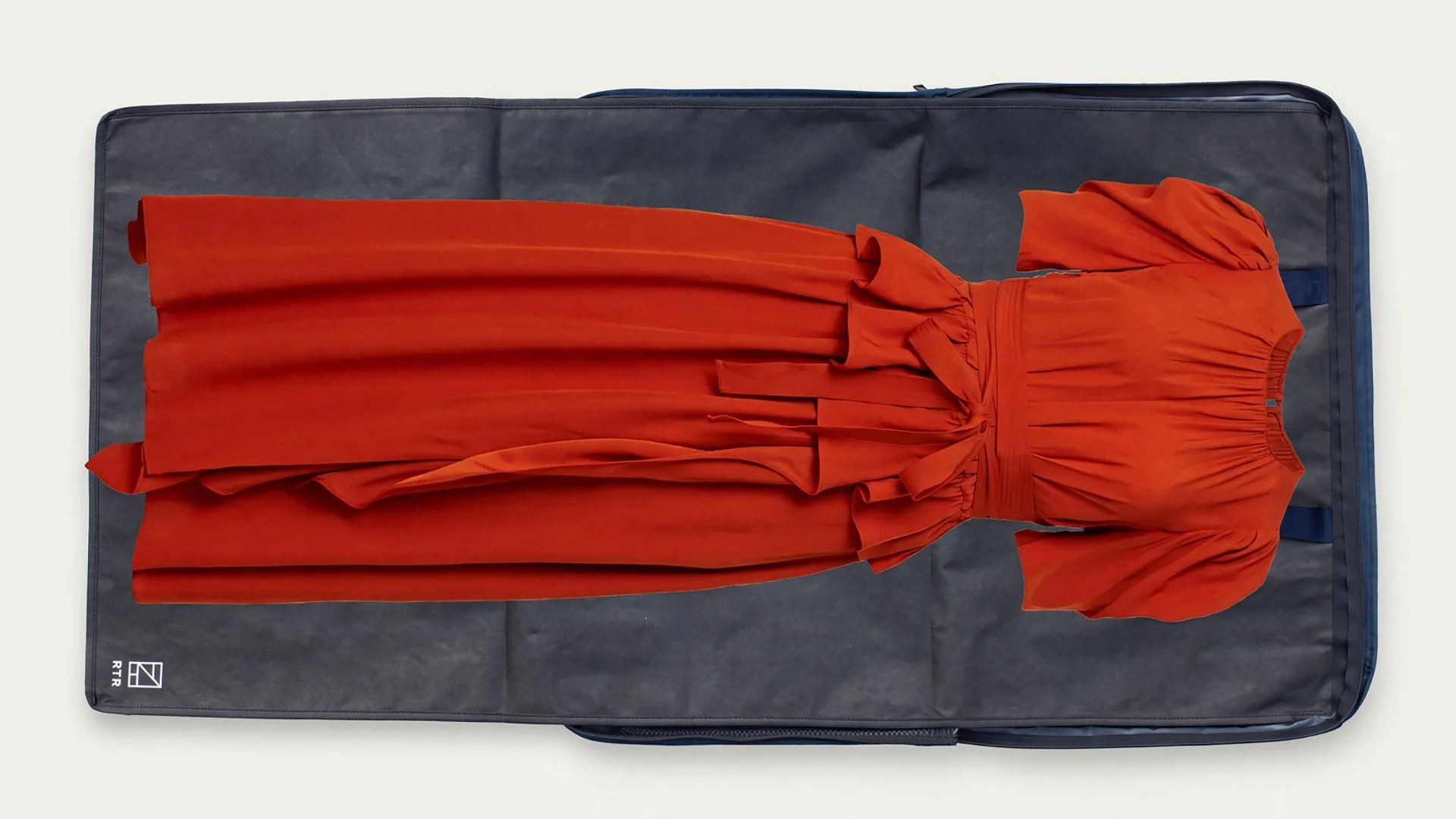
Kargo designed the system before the silhouette. Materials were locked first. Moving from accessory-grade fabric to packaging-grade materials cut cost and removed laundering, so durability and wipe-clean care were built into the construction from the start. A few directions were developed on that material system and narrowed on cost, loading speed, and sorter performance. Two were prototyped and tested against real warehouse loading: the Wallet, and the Soft Box, a collapsible top-loading box in dark navy laminate. The Soft Box was easy to load, but folding garments to fit cost them their presentation, and it was awkward to carry. The Wallet kept the simplicity, let clothes lie flat, and shipped.
Material Tests
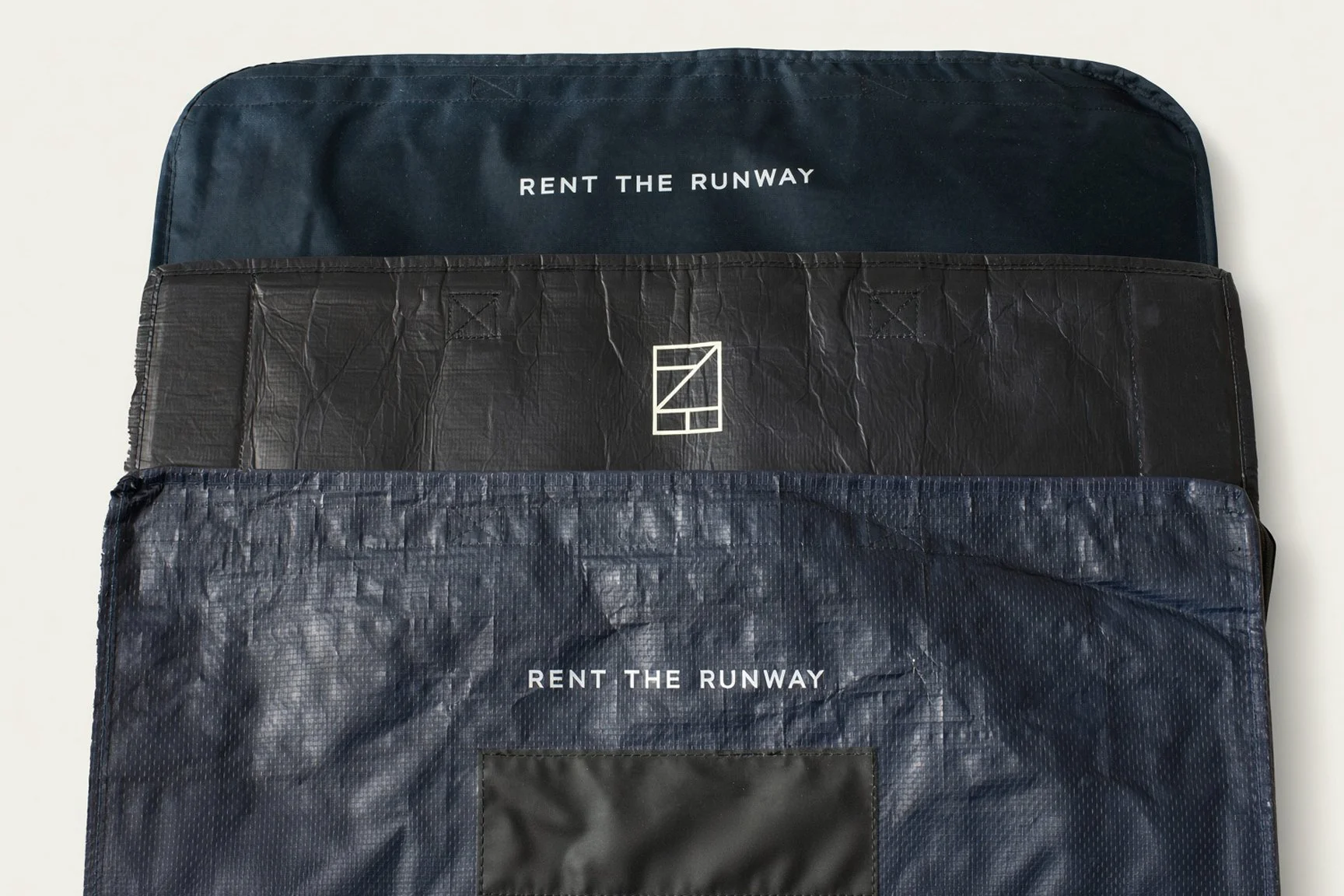
Coated canvas, 100% recycled RPET, and PP woven with 40% recycled content.
Design Tests
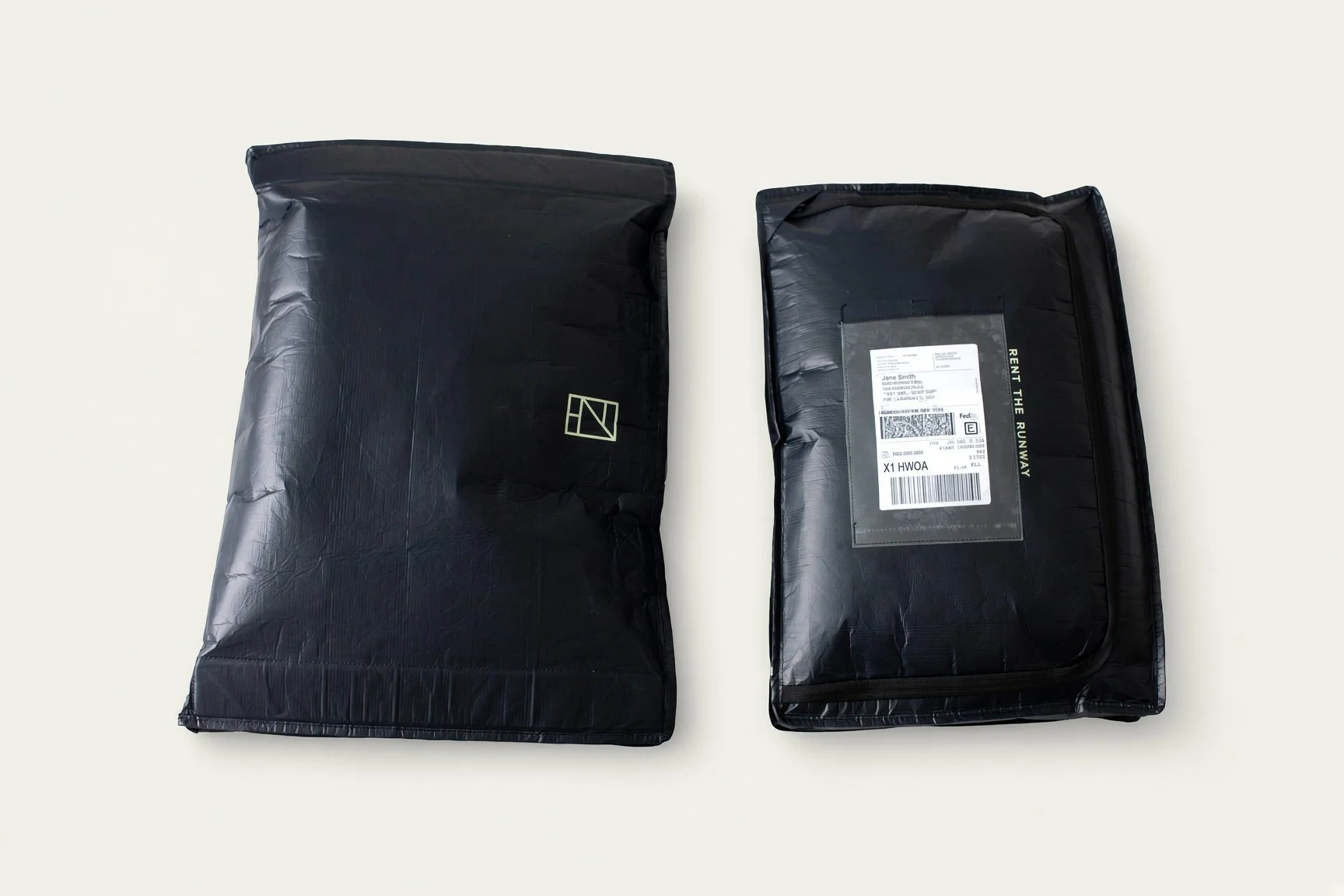
Two formats were tested, the Wallet and the Soft Box, along with two label options, a sewn patch and a clear window.
Key Elements:
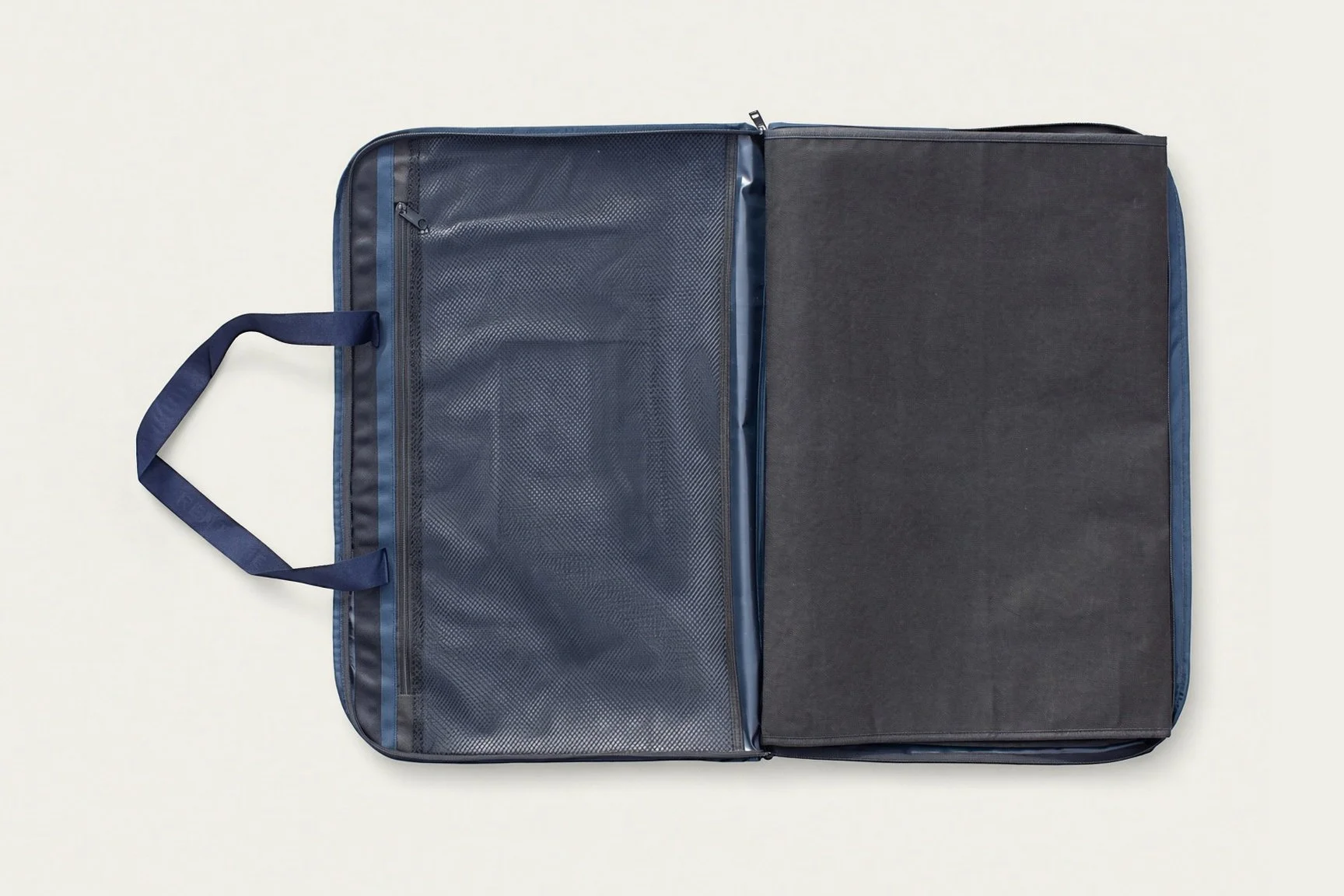
Navy laminated shell that wipes clean, removing the need to launder the shipper
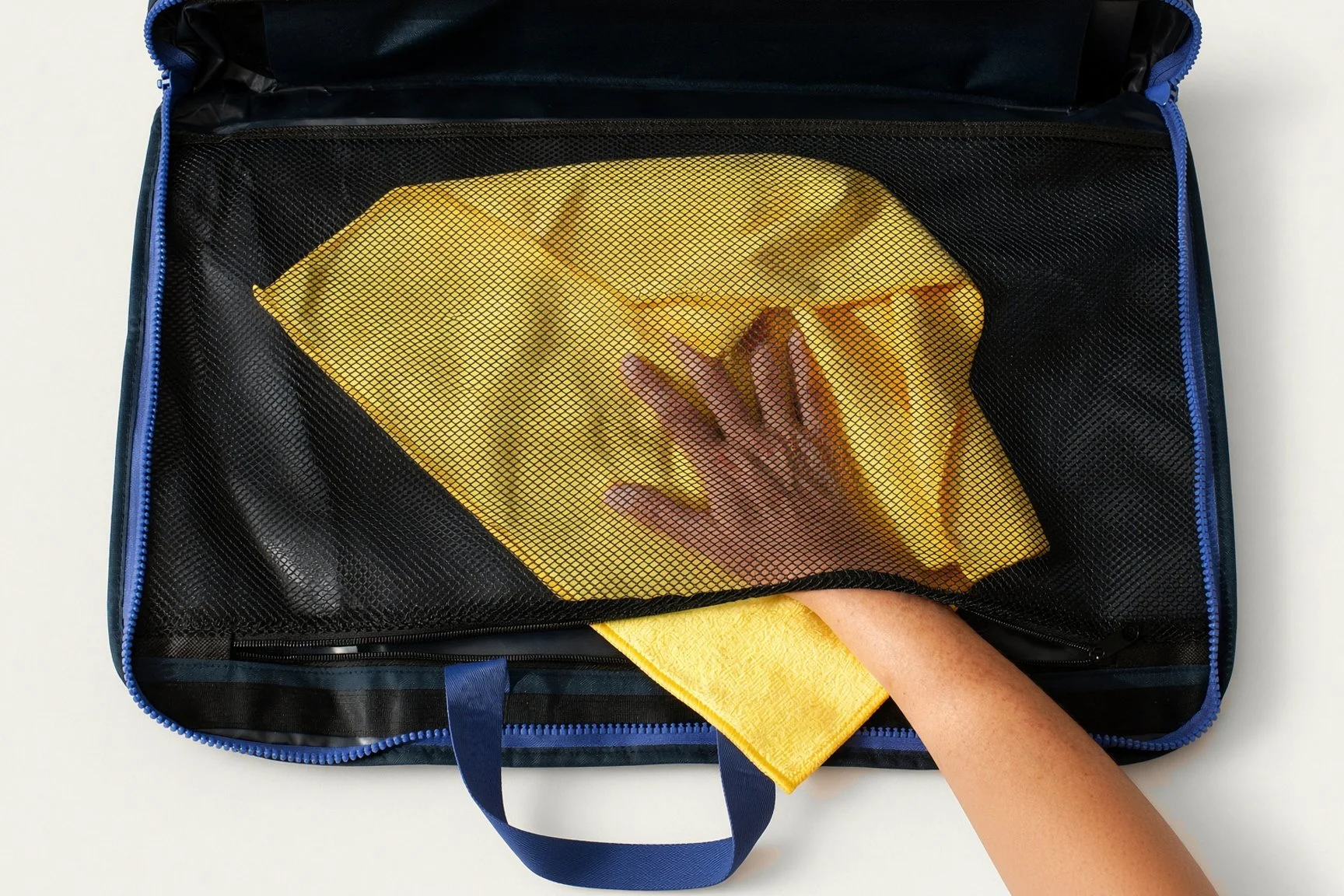
An inner fabric wrap that acts as both the packing surface and the compression that replaces poly
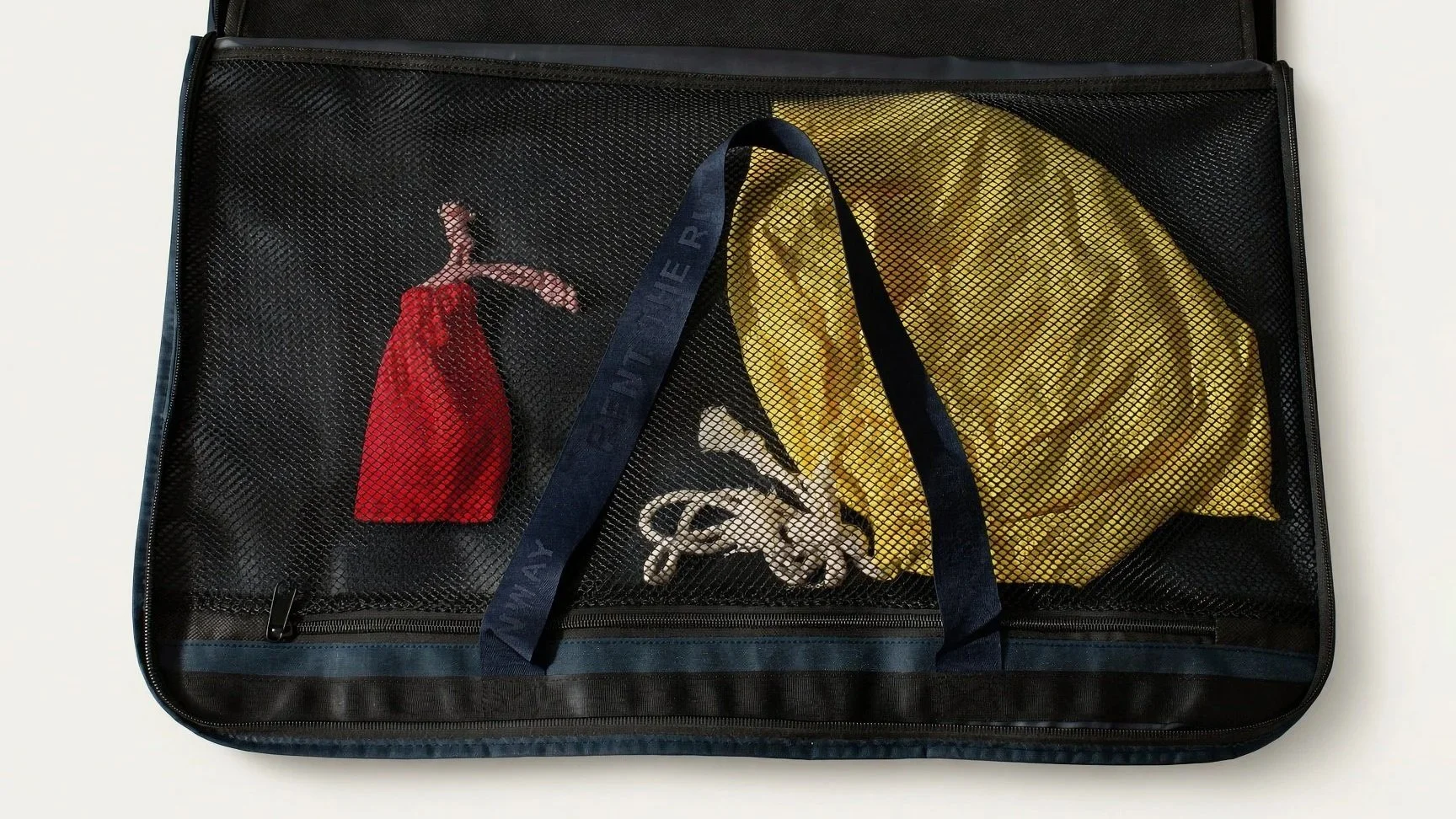
A mesh pocket that keeps small items secure in transit
A top zip and reinforced gusset for faster loading
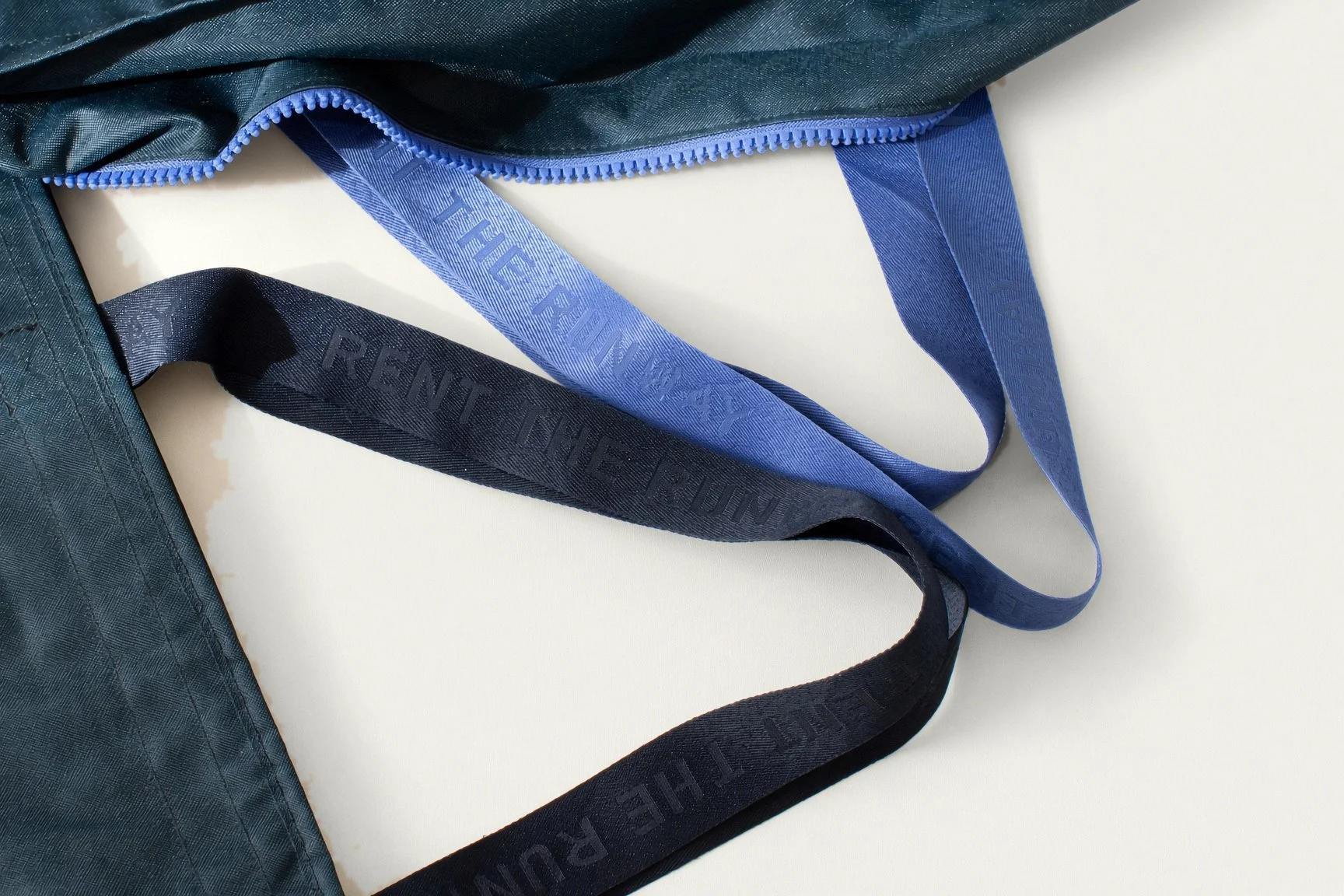
Reinforcement boards and tucked handles, so the bag moves through sorters without catching
A flat face with a slide-in label window, so the same shipper becomes the return package
When a brand's challenge is complex, Kargo designs a custom system that makes it simple. For Rent the Runway, that meant designing out everything the shipper did not need, leaving packaging that is simpler for packers, better for customers, and creates less waste.
Results
Cost held to a cap considerably below the 2014 bag
Poly designed out of the standard load
Hangers removed from the default load
Wipe-clean construction built to a 25-shipment durability target, with no wash program
One shipper for outbound delivery and return
Two sizes, large and slim, color-coded at the zipper and handle for fast sorting
Warehouse needs built into the object: top loading, tucked handles, sorter boards, and a flat label face
Services Used:
Design & Engineering, Sourcing, Product Development, Production, Supply Chain & Logistics